

Commercial Litigation Marketing Experts
Marketing Built for High-Stakes, High-Consideration Cases
Business litigation isn’t a volume practice, and it shouldn’t be marketed like one. A single partnership dispute or trade secrets case can outweigh a month of smaller matters, which means your marketing has one job: put your firm in front of a small, specific, well-informed audience and make you the obvious call.
We help commercial litigation firms show up in organic search, in AI-generated answers, and in the paid results where in-house counsel and business owners are doing their due diligence. Then we make sure the site they land on reads like a firm that tries cases — not a template with a stock photo of a gavel. Conversions, not Diversions.

Marketing Services
Strategic Marketing Services for Business Litigation Firms
Whether you’re a single litigation practice in St. Louis or a multi-state firm defending commercial claims, we build the strategy around how your clients search.
Search Engine Optimization (SEO)
Commercial litigation search volume is low and the intent is enormous. We target the terms that matter and build the practice-area depth that earns those rankings.
Learn MorePay-Per-Click (PPC) Advertising
Commercial legal keywords carry some of the highest costs per click in search. We manage spend against qualified leads and signed matters with geo-targeting, negative keyword discipline, and conversion tracking that ties back to real case value.
Learn MoreSocial Media Marketing
Your next client is on LinkedIn, and so are the attorneys who refer commercial cases out. We build compliant, credible campaigns that keep your litigators visible to both audiences.
Learn MoreWebsite Design & Development
Your website is your opening statement to a skeptical, sophisticated reader. We design fast, clear, credibility-forward sites that surface your results, your bench, and a frictionless path to a consultation.
Learn MoreSchedule a Consultation
Your Next Case Is Searching Right Now
Somewhere, right now, a business owner just found out their contract won’t hold. Whether they find your firm or a competitor’s comes down to the foundation you’ve built online. Let’s build it.
Client Spotlight
Simon Law: Law Firm Marketing With Proven Results
Success in legal marketing comes from partnering with an agency focused on real case growth. Timmermann Group worked alongside Simon Law to launch a new website built to rank for competitive searches and a marketing strategy designed to attract and convert high-intent leads. Hear directly from members of Simon Law’s team about TG’s proactive marketing efforts and the results we’ve achieved together.
Case Studies
View Our Success Stories

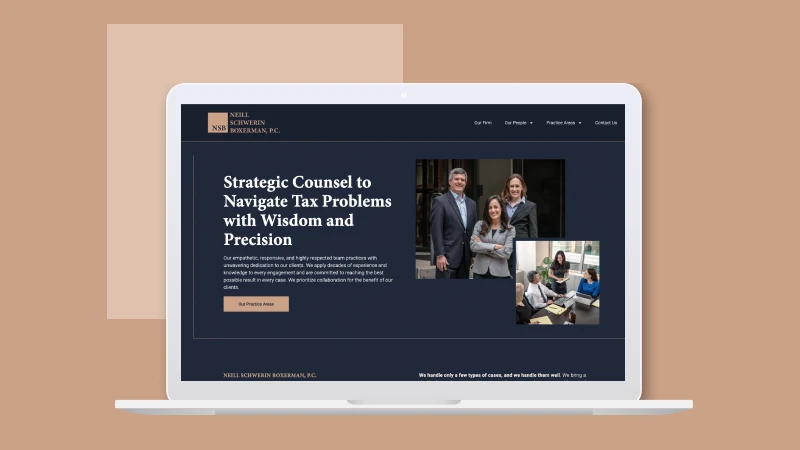

Law Firms We've Helped









Have a Question About Business Litigation Lawyer Marketing?
If you have a question about Timmermann Group’s marketing services and aren’t ready to schedule a free consultation, fill out this form and a member of our team will be in touch shortly.
Fill out the form below and a member of our team will respond shortly.
"*" indicates required fields
FAQs
Frequently Asked Questions About Business Litigation Marketing
Referrals are a great lead source for most business litigation attorneys, and nothing here suggests you should trade them away. But a referral is a recommendation, not a decision. When another attorney or a CPA passes your name along, the executive on the other end almost always searches for your firm before they call. What they find in the search results — your website, your Google Business Profile, your attorney bios, your client reviews — either confirms the referral or quietly undercuts it. An outdated site tells a general counsel you may not be current on much else.
Effective marketing does two things for a referral-driven litigation law firm. First, it protects the referrals you already earn by ensuring your digital presence reflects your courtroom experience and the caliber of legal representation you provide. Second, it adds a second channel so business development doesn’t depend entirely on who happens to think of you this quarter. Local SEO, paid media, and a disciplined intake process help prospective clients find you when their referral network comes up empty — which happens more often than firms assume in specialized disputes such as intellectual property, regulatory matters, and class actions. The goal isn’t to replace relationships. It’s to stop leaving the ones you don’t have a chance with.
Search engines reward sites that clearly demonstrate expertise, and for a business litigation firm, that starts with your practice areas. Every major type of dispute you handle — breach of contract, shareholder and partnership disputes, trade secret and intellectual property claims, class actions, regulatory matters — deserves its own page written for the person with that problem right now, not a single “Litigation” page that covers everything and convinces no one.
From there, local SEO does more work than most firms expect. A complete, actively maintained Google Business Profile with real client reviews affects whether your firm appears when a Kansas City manufacturer searches for business litigation attorneys. Your attorney bios matter for the same reason: people search for lawyers by name after a referral or a networking event, and those pages are often the highest-converting content on a law firm website.
Content marketing sits atop that foundation. A well-researched blog post explaining how a recent ruling changes risk for a specific industry is worth more than a dozen generic legal services posts. It earns links, gets shared on LinkedIn and gives your team something useful to send to prospective clients. SEO is a long game, but the compounding is real — and it’s cheaper every year you stay with it.
It depends. Paid media in the legal space is competitive, and business litigation keywords are among the most competitive there are, because other law firms are bidding on the same small pool of high-value searches. But cost per click is the wrong number to fixate on. The number that matters is cost per signed case, and on a case worth six figures, even expensive clicks can still be a strong investment.
Where Google Ads earn their keep is intent and timing. Someone searching for a commercial litigation attorney in St. Louis on a Tuesday morning has a problem that started before the weekend. Paid search puts you in front of them immediately, while SEO on a new page is still building momentum. Used well, PPC also functions as research: within a few months you’ll know which practice areas actually generate qualified leads, and that data should inform your organic content and the rest of your marketing channels.
The failure mode is running ads to a homepage with a contact form and hoping for the best. Ads need dedicated landing pages that match the search, an intake process that responds in minutes rather than days, and honest tracking that ties spend to signed clients. Without those three, paid media becomes an expensive way to buy traffic. With them, it becomes a predictable source of new business.
You don’t need to become a full-time writer. You need a system that captures what you already know. The attorneys at most litigation firms generate thought leadership material constantly — in client emails, CLE presentations, motions, and hallway conversations about a ruling that just changed something. The problem isn’t a lack of ideas. It’s that nothing captures them.
The practical version looks like this: a short conversation every few weeks, transcribed and shaped into an article, a LinkedIn post, and a section for your next newsletter. With the right partner, twenty minutes of an attorney’s time can produce a month of marketing materials. Speaking engagements, panels, and bar association work get the same treatment — one talk becomes a video clip, a blog post, and a case study reference.
This matters more in business litigation than in almost any other practice. Executives hire the attorney who seems to already understand their industry. Publishing real industry insights — not recycled legal news — is how you become the thought leader they think of first, and it strengthens your referral network at the same time, because other attorneys refer to the person who visibly owns a niche. Building trust at scale is the whole point. Thought leadership is just what that looks like when it’s written down.
Start by deciding what a win is, then work backward. For most business litigation firms, the meaningful outcomes are qualified consultations, signed cases, and revenue by practice area. Everything else — rankings, sessions, impressions — is diagnostic. Useful for troubleshooting, not for judging whether your marketing investment is paying off.
That means the tracking has to reach past the website. Form fills and calls need to be tied to their source, then followed through your intake process to a signed client. If a phone call from a Google search becomes a $250,000 case and nobody records where it came from, you’ll conclude the wrong things and cut the wrong budget. Most firms discover, once tracking is in place, that one or two channels drive nearly all the value, so you can strategically shift your budget to what proves out.
Set expectations on timing, too. Paid media gives you a signal within weeks. SEO may take a couple of months to show meaningful movement, and longer in competitive markets. Judge them on the right schedule and against the right benchmark — your own baseline and your direct competitors, not a national firm with a fifty-person marketing department. Reviewed monthly against clear marketing goals, this becomes a straightforward business decision rather than a leap of faith.
Our Process
What to Expect When You Work with Timmermann Group
-
01 Discovery & Practice Alignment
Every effective litigation marketing strategy starts with knowing which cases you want more of. In the first two weeks, we sit down with your partners to understand your target case types, average case value, jurisdictions, and where your best work has historically come from — search, referral, or reputation. We audit your current performance, validate tracking across GA4, your intake and CRM systems, call tracking, and form submissions, and analyze how competing firms in your market are positioned.
This phase also covers compliance review against your state bar’s rules and an honest look at your existing site’s ability to convert a sophisticated user. By the end of it, you’ll have a defined strategy tied to signed cases.
-
02 Foundation & Infrastructure
Before anything launches, we build the strategic foundation on which everything else depends. That might include a keyword and messaging map organized by case type and jurisdiction — breach of contract, partnership disputes, non-compete enforcement, trade secrets — so every service we run points at the same targets. Depending on scope, this is where technical SEO and site architecture, design and development, campaign structure, or channel setup gets built, along with full conversion tracking configured and quality-assured across the board.
The goal of this phase is to turn on next produces clean, trustworthy data from day one.
-
03 Launch & Early Optimization
This is where the practice becomes visible. Paid campaigns, on-page optimization, and new pages begin going live in the sequence that makes the most sense for your engagement. Paid channels start producing inquiries almost immediately, while organic and site work begin compounding underneath them.
We review lead quality with your intake team from the start. Early optimization focuses on refining our strategy for best-fit leads: messaging and creative response, audience and targeting refinement, budget pacing, and removing friction from the paths that lead to a consultation request.
-
04 Refinement & Authority Building
As real data accumulates over the coming weeks, optimization gets sharper. We expand content depth where pages are close to breaking through, tighten campaigns around the search terms and audiences that produce qualified matters, and structure your content so that AI Overviews and generative search engines cite your firm when a business owner asks whether they have a case. Conversion rate optimization runs continuously, from consultation forms and calls to action to the proof points that move skeptical users from reading to calling.
-
05 Scaling What Works
Once performance stabilizes, we expand deliberately. Investment shifts toward the matter types that produce the highest-value signed cases, new content clusters open up adjacent practice areas, and we extend into additional jurisdictions where your firm is licensed to serve. If it makes sense, we add channels — a firm that started with SEO grows into Paid Media, or a paid-first engagement builds the organic foundation that lowers acquisition cost over time.
This is where momentum builds. We grow the caseload without loosening the standards that keep the inquiries qualified.
Schedule a Consultation
Your Next Case Is Searching Right Now
Somewhere, right now, a business owner just found out their contract won’t hold. Whether they find your firm or a competitor’s comes down to the foundation you’ve built online. Let’s build it.
How to Choose
What to Look for in an Agency for Litigation Attorney Marketing
Most agencies will tell you they work with law firms. Far fewer can explain how marketing a commercial dispute practice differs from marketing a personal injury firm — and that gap is where budgets get wasted. Before you sign with anyone, including us, here's what worth pressing on.
Ask how they would market for business litigation
This one question sorts the field fast. If the answer is about volume, intake speed, and aggressive ad spend, they're describing consumer legal marketing. Commercial litigation runs on the opposite logic: low search volume, long research cycles, and a client who may already have a law degree. An agency that can't articulate that distinction will build you the wrong strategy with real conviction.
Find out what they count as a win
Traffic, impressions, and keyword rankings are easy to grow and easy to hide behind. Ask what metric appears at the top of their monthly report and whether it connects to signed matters. A good partner will want access to your intake data so they can tell the difference between forty inquiries and four worth taking — and will be uncomfortable reporting on anything less.
Confirm they understand legal advertising compliance
State bar rules govern how firms can advertise, what constitutes a testimonial, how past results may be referenced, and what disclaimers belong where. An agency unfamiliar with those constraints may open a costly can of worms.
Ask who is actually doing the work
Plenty of agencies sell you a senior strategist and staff the account with subcontractors you'll never meet. Find out where the writing, the campaign management, and the development happen, and whether the people in the pitch will be in your monthly calls.
Ask how their strategy accounts for AI search
A meaningful share of business owners now start with an AI assistant rather than a search bar, asking whether they have a case before they ever look for counsel. If an agency's plan is unchanged from what it would have been three years ago, they're optimizing for a search landscape that doesn't exist anymore. You want a partner who can explain how your content gets cited in generated answers, not only ranked in the SERPs.
Look for someone willing to tell you no
The right partner will push back — on a practice area that won't support the spend, on a keyword that won't convert, on a redesign you don't need. Agencies that agree with everything are optimizing for their revenue, not your results. In an engagement that should last years, you want the one who brings you the uncomfortable perspective on your own practice before you have to ask for it.