Review Gating: What It Is, Why It’s Risky, and How to Get Reviews The Right Way
Review gating may look like a harmless customer-feedback shortcut, but in 2026, it poses major risks to your legal, SEO, and business reputation. If your brand depends heavily on online reviews, local search visibility, and cultivating long-term customer trust, your review-generation process must change. Instead of hiding flaws, you need an open system that actively invites honest reviews from every single client, regardless of their experience.
Key Takeaways
Understanding the clear distinction between fair review solicitation and manipulative, selective filtering is essential for protecting your digital footprint. Here are the core insights every business owner must know:
- Review Gating Defined: Review gating is the practice of soliciting reviews only from satisfied customers, which skews the overall perception of a business’s reputation by filtering out negative feedback.
- Platform Penalties: Since 2018, Google has banned review gating on Google Business Profiles and may remove reviews, suspend profiles, or completely reduce your search visibility.
- Legal Consequences: The Federal Trade Commission (FTC) enforces strict guidelines against deceptive review practices under the Consumer Review Fairness Act, with financial fines reaching up to $44,000 per violation.
- Compliant Strategies: A compliant review generation strategy asks all customers for honest reviews, addresses negative reviews constructively, and uses authentic feedback to drive more customers and higher conversions without jeopardizing your GBP optimization strategy.
What Is Review Gating?
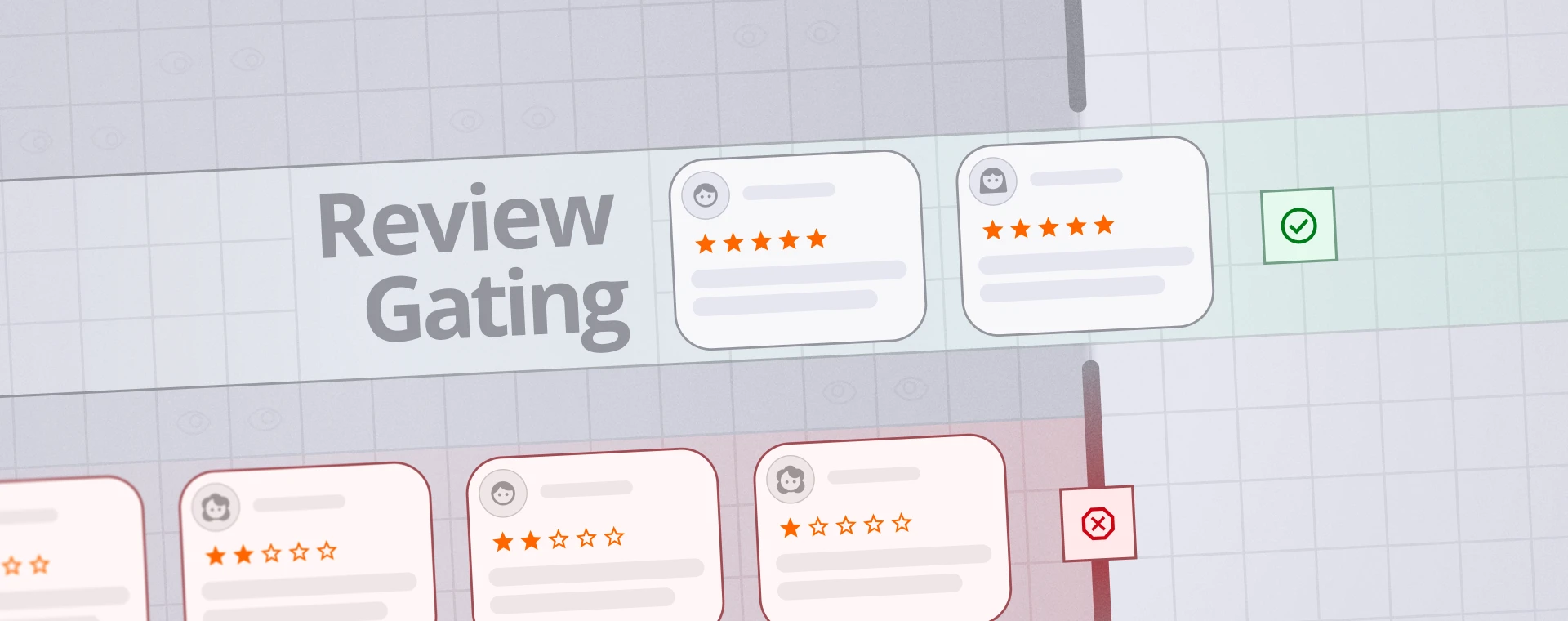
When it comes to digital marketing, maintaining an excellent online reputation is vital for every growing business. However, some brands turn to shortcuts known as review gating to artificially manipulate their public scores. Review gating is any process that selectively encourages only satisfied customers to post public reviews while discouraging or preventing unhappy customers from doing so. In contrast to review gating, review solicitation encourages all customers to leave feedback, regardless of their experience, promoting transparency and authenticity.
When a business engages in review gating, it disrupts the natural balance of authentic reviews across the web. By implementing strict filtering based on expected satisfaction, the company creates a highly polished but fundamentally inaccurate picture of its actual customer experience. This manipulative approach ensures that only positive reviews reach public review platforms, effectively hiding any negative comments that could warn future buyers.
Review Solicitation vs. Gating
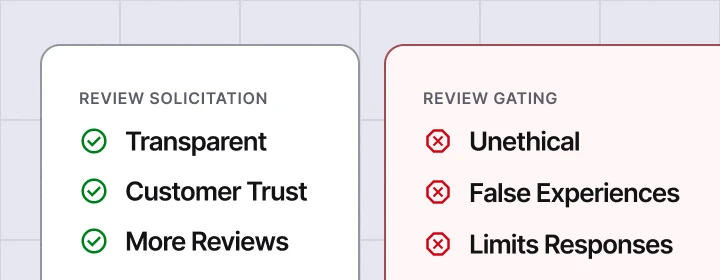
To fully grasp why these unethical practices are heavily targeted by major tech platforms, it helps to look at review solicitation vs. gating. Research shows that review gating limits overall review count, while requesting feedback from everyone increases review volume significantly. When you open the floor to all customer reviews, you naturally earn more reviews over time. This transparent approach builds a stronger foundation for long-term customer trust and provides an accurate representation of your operations.
On the other hand, review gating relies on separating your happy customers from your unhappy customers before they ever have a chance to leave a review. Both the Federal Trade Commission (FTC) and Google prohibit review gating, emphasizing that businesses should not selectively solicit positive reviews or discourage negative ones, as this misrepresents consumer experiences. True review generation means treating every single transaction with the same level of openness and respect.
What Is Considered Review Gating?
It is important to understand exactly what is considered review gating under the current platform guidelines. Many business owners unintentionally violate the rules because they use automated customer feedback software that handles filtering based on customer sentiment automatically. If your review requests contain conditional logic—meaning the next step changes based on whether the customer had a positive experience or a negative experience—you are likely gating reviews.
Google’s policies prohibit review gating, which involves selectively soliciting positive reviews while discouraging negative ones, to maintain consumer trust in online reviews. Google treats selectively soliciting positive reviews, discouraging submitting negative reviews, and trying to prohibit negative reviews as fake engagement under its Maps contributed content policy. If your system works to actively discourage people from sharing their true thoughts publicly, it violates the basic principles of fair consumer platforms.
Filtering Based on Expected Satisfaction
Many local brands fall into the trap of filtering based on initial sentiment surveys or internal scorecards. For example, sending an automated Net Promoter Score (NPS) email to customers and only providing a link to Google reviews to those who rate the business a 9 or 10 is a textbook violation. The system acts as a deliberate barrier, preventing those with lower scores from easily accessing external review platforms.
This kind of systematic pre-screening means a business is only collecting positive ones while deliberately suppressing negative ones. This results in biased ratings that fail to provide an accurate representation of how the business actually treats its clients. True consumer trust can only be achieved when potential customers can see the full spectrum of customer reviews.
Routing to a Private Feedback Form
Another common tactic that falls under what is considered review gating is routing dissatisfied users exclusively to an internal private feedback form. While collecting private feedback is an excellent way to resolve internal issues, it cannot be used as a substitute for allowing a public review. If your automated workflow forces unhappy customers to leave private feedback while guiding happy customers directly to a public review site, you are crossing an ethical line.
Forcing individuals to provide private feedback while letting others post openly creates a heavily biased online presence. It intentionally hides legitimate operational flaws from prospective customers who are trying to make an informed purchasing decision. To remain compliant, a business must give everyone the exact same freedom to choose whether they want to submit a public review or use a private feedback channel.
What Is an Example of Review Gating?
To make this concept completely clear, let’s look at what is an example of review gating in a real-world scenario. Imagine a local dental practice that sets up an automated text message system to manage reviews. After an appointment, every patient receives an automated text prompt asking them to rate their visit from 1 to 5 stars. If a patient selects 5 stars, the system immediately pops up a message saying, “Thank you! Please leave a review on our Google Business Profile,” complete with a direct, clickable link.
However, if the patient selects 1 or 2 stars, the system displays a completely different screen: “We are so sorry to hear that. Please fill out this private feedback form so our management team can contact you immediately.” In this example, the dental practice is actively preventing negative reviews from reaching the public eye while systematically harvesting positive reviews. This classic flow is exactly what review platforms and regulatory bodies have strictly banned.
The Automated Email or SMS Flow
Review gating often hides inside normal-looking email campaigns or sms messages sent right after a purchase. A customer buys a product, receives an automated email, and is asked to select a smiley face based on their experience. If they select the happy face, they are urged to leave positive testimonials on public sites. If they choose the sad face, they are routed to an internal customer support ticketing system with no mention of public platforms.
This layout ensures that the business receives only positive reviews publicly, while its actual operational problems remain completely hidden. Even if business owners believe they are simply trying to offer solutions to angry clients, the structural exclusion of negative feedback renders the system non-compliant. To fix this, the public review links must be clearly visible to all users, regardless of which face they click.
Why Review Gating Is a Major Business Risk
Engaging in review gating does more than break platform guidelines; it introduces massive strategic risks that can completely derail your digital marketing efforts. Review gating can damage a company’s reputation by eroding consumer trust; potential customers may become skeptical of businesses that only display positive reviews, leading to decreased sales and loyalty. Consumers in 2026 are highly sophisticated and can easily spot a profile that looks entirely manufactured.
Strategically, hiding bad experiences through review gating results in a loss of vital, honest feedback needed to improve products or services. If your leadership team never sees the real negative comments from your customers, you cannot address the root causes of client dissatisfaction. This ultimately harms your long-term customer experience, reduces customer loyalty, and limits your business growth.
Account Suspensions and Loss of Google Reviews
The immediate operational risk to your local SEO and online presence is severe. Businesses that engage in review gating risk having their reviews removed or their accounts suspended by platforms like Google, which strictly prohibits the practice to maintain trust in online reviews. Google’s policies strictly prohibit review gating, and businesses found to be engaging in this practice risk having their Google Business Profile reviews removed or facing account suspension, which can severely impact their online presence.
Imagine losing hundreds of hard-earned, genuine reviews overnight just because your review generation software used a forbidden filtering mechanism. A suspended Google Business Profile can devastate a local business, cutting off its primary source of inbound leads and organic map traffic. The temporary advantage of masking a few bad reviews is never worth the risk of total digital erasure from major search systems.
Artificially Inflated Ratings and Flawed Operations
Review gating creates an artificially inflated rating that hides legitimate operational flaws. When your public scores are deceptively high, they mask deep-seated issues in your delivery, pricing, customer service, or product quality. This artificial shield prevents your business from evolving and fixing the friction points that drive clients away in the first place.
Over time, the gap between your online reputation and your actual customer experience will widen significantly. When real-world customers experience poor service from a business that boasts a perfect 5.0 rating, their disappointment is magnified. This often results in even harsher public backlash and severe, irreversible damage to your brand’s integrity.
Is Review Gating Illegal?
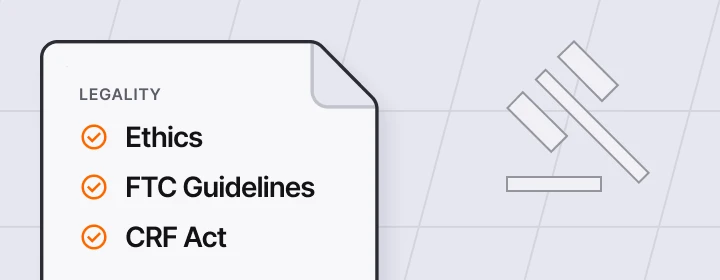
A critical question many modern business owners ask is: Is review gating illegal? The short answer is yes. Review gating is considered illegal and unethical because it misrepresents a business’s true customer experience by soliciting only positive reviews and suppressing negative ones. In the United States, regulatory enforcement has intensified significantly to protect consumers from misleading online practices.
The legal landscape treats review manipulation as a form of deceptive advertising. When a business deceptively filters out negative experiences, it deprives the public of an accurate representation of its services. This means that using such practices to gain an unfair advantage over competitors is a direct violation of federal consumer protection laws.
Federal Trade Commission Rules and Heavy Fines
The Federal Trade Commission (FTC) guidelines state that businesses should not only ask for reviews from customers they believe will leave positive feedback, but they should also not incentivize reviews with rewards or discounts. The Federal Trade Commission (FTC) imposes penalties of up to $44,000 per violation for businesses that engage in review gating practices, as it violates the Consumer Review Fairness Act.
These are not empty threats; review gating can lead to significant legal consequences, including fines of up to $44,000 per violation from the Federal Trade Commission (FTC) for practices that mislead consumers, such as selectively soliciting positive reviews. Violating review guidelines set by platforms like Google and the FTC can lead to severe penalties, including fines up to $44,000 per violation under the Consumer Review Fairness Act. Furthermore, updated guidance under newer consumer review rules allows for even higher civil penalties depending on the scale of the violation, as seen in landmark settlements like Fashion Nova’s $4.2 million fine for hiding lower-star customer reviews.
The Consumer Review Fairness Act
The Consumer Review Fairness Act protects the right of individuals to share honest reviews, including negative reviews, about businesses. Under this act, companies cannot use contract provisions, non-disparagement clauses, or technical barriers to prohibit negative reviews or punish clients who voice dissatisfaction.
Any system or strategy that deliberately works to suppress negative feedback or discourage people from posting honest accounts is a direct violation of this federal statute. To ensure your business stays on the right side of the law, your review solicitation methods must treat every customer equally, without any conditional barriers or hidden restrictions.
The Hidden Upside of Negative Reviews
While every business owner prefers receiving positive reviews, there is a powerful, hidden upside to getting a few negative reviews. A healthy mix of positive and negative reviews looks far more credible to potential customers than a flawless wall of perfect scores. If a company has thousands of reviews without a single complaint, modern consumers immediately suspect that the brand is publishing reviews selectively or using fake reviews.
Authentic, resolved complaints can actually build credibility for businesses, while a profile without negative reviews can look suspicious. Prospective customers want to see how a business handles adversity. Seeing a business respond professionally to a mistake and offer solutions can actually convert a skeptical shopper into a loyal customer far faster than an unblemished, unrealistic 5.0 rating.
Why Flawless Profiles Look Suspicious to Potential Customers
Data shows that profiles with a minor distribution of lower scores convert better than those with only perfect ratings. Potential customers are inherently skeptical of absolute perfection online. They recognize that no business is perfect, and a totally clean sheet often indicates unethical practices like review gating or buying fake reviews.
Having a realistic rating—typically within the 4.2 to 4.7-star range—demonstrates that your customer reviews are authentic and genuine. It provides an accurate representation of a real business operating in the real world. This transparency fosters genuine customer trust and strengthens your overall online reputation.
Turning Bad Reviews into Valuable Insights
Every bad review contains valuable insights that can help your business grow. When customers take the time to leave detailed negative feedback, they are highlighting specific friction points in your customer experience. It could be an issue with slow delivery, a rude support interaction, or a confusing checkout process.
Instead of trying to suppress these comments through review gating, smart businesses use them as an essential diagnostic tool. By addressing the root causes of these negative experiences, you can optimize your operations, build deeper customer loyalty, and ultimately prevent future complaints from happening in the first place.
How to Handle a Negative Review Constructively
When a bad review does appear on Google Reviews or other review platforms, the worst thing you can do is ignore it or react defensively. Instead, you should look at it as an opportunity to showcase your commitment to excellent customer service. Having a clear, professional playbook to address negative reviews is essential for protecting your online reputation.
Always respond professionally and promptly. Acknowledge the customer’s negative experience, apologize sincerely without making excuses, and offer solutions that can resolve the matter offline. A structured, calm response demonstrates to prospective customers that your business values honest reviews and is dedicated to making things right.
| Action Step | What to Do | What to Avoid |
|---|---|---|
| 1. Acknowledge | Validate the customer’s feelings and thank them for the feedback. | Do not argue, get defensive, or blame the customer. |
| 2. Apologize | Offer a sincere apology for the friction they experienced. | Avoid generic, robotic copy-pasted responses. |
| 3. Offer Solutions | Provide a direct path (email/phone) to resolve the issue privately. | Never post sensitive customer details publicly. |
| 4. Follow Up | Fix the internal flaw and confirm resolution with the client. | Do not pressure the customer to edit reviews aggressively. |
How to Avoid Review Gating and Stay Compliant
The best way to safeguard your digital presence is to learn how to avoid review gating entirely. To build a compliant review collection strategy, businesses should automate review requests to all customers, ensuring that no filtering based on expected satisfaction occurs. Your review system must be completely blind to whether a client had a positive experience or a negative experience.
Review generation involves inviting all customers to leave feedback, regardless of their experience, which promotes transparency and fairness in the review process. When you build a system that opens the doors to everyone, you stay fully aligned with both Google policies and Federal Trade Commission guidelines. This compliant path removes the threat of legal fines and account suspensions while organically expanding your review volume.
Building a Compliant Review Generation Strategy
To create a sustainable review generation strategy, you need to audit your current software and automated workflows. Check your email templates, SMS messages, and CRM triggers to ensure there are no conditional gates. Every single customer should receive the exact same messaging and the exact same public links after a transaction.
Encaging customers to leave reviews after a purchase can significantly increase the likelihood of receiving feedback, with studies showing that 70% of customers will leave a review when asked. By sending consistent, unfiltered review requests to every client, you will naturally generate more reviews. This balanced approach ensures a steady stream of authentic reviews that boost your local SEO and build genuine customer trust.

How Timmermann Group Helps Businesses Stay Compliant
Navigating the complexities of platform guidelines and legal rules can be challenging for busy business owners. That is where Timmermann Group comes in. As a conversion-first digital marketing agency founded in 2003, Timmermann Group helps businesses build sustainable, compliant Google Business Profiles that comply fully with Google and FTC guidelines. By connecting your customer reviews to local SEO, PPC, and website user experience, we turn your online reputation into a powerful growth flywheel that naturally attracts more customers.
FAQ: Deep Dive Into Compliant Review Practices
What is considered review gating?
Review gating is considered the practice of pre-screening or filtering your customers based on their satisfaction level before allowing them to post a public review. If your system selectively directs happy customers to public review platforms while routing unhappy customers to a private feedback form or support channel, that structure is considered review gating.
What is an example of review gating?
A classic example of review gating is an automated post-purchase email that asks, “Did you love your service?” If the customer clicks “Yes,” they are instantly given a direct link to leave Google reviews. If they click “No,” they are redirected to an internal text field to leave private feedback, completely hiding the links to public review platforms from dissatisfied users.
Is review gating illegal, or just against Google’s rules?
Review gating is both strictly against Google’s platform guidelines and illegal under federal law. The Federal Trade Commission (FTC) considers review gating to be a deceptive practice that misrepresents consumer experiences, violating the Consumer Review Fairness Act and carrying civil penalties of up to $44,000 per violation.
How to avoid review gating while protecting my online reputation?
To know how to avoid review gating, you must automate your review requests so that every customer receives the exact same link to public review platforms, regardless of their experience. Instead of hiding bad feedback, focus your energy on learning how to address negative reviews professionally and using that authentic feedback to fix internal operational flaws.
Can I offer rewards or incentives for customers to leave reviews?
According to the Federal Trade Commission, incentivizing reviews with rewards, discounts, or free goods is highly restricted. If you do offer incentives, they must be offered to all customers equally, must be fully disclosed, and can never be tied to whether the user leaves positive reviews or negative reviews.
Will a few bad reviews hurt my local SEO or conversion rates?
No, a balanced profile containing a mix of positive and negative reviews actually improves conversion rates because it looks far more credible to potential customers. Search engines and prospective buyers are suspicious of perfect scores; a realistic rating distribution proves that your reviews are genuine and provides an accurate representation of your customer experience.