Demand Generation vs Lead Generation in Google Ads: How to Grow (and Convert) Demand
B2B buying has changed, but many Google Ads strategies haven’t kept up. In 2026, the real advantage lies in understanding when to create demand and when to capture intent in Google Ads. This guide breaks down why demand generation and lead generation are not competing strategies, how they work together in a full-funnel Google Ads approach, and how to balance budget, channels, and KPIs to drive both near-term pipeline and long-term revenue growth.
Key Takeaways
- B2B buyers spend most of their journey self-educating, so demand generation is required for Google Ads to work efficiently in 2026
- Lead generation alone targets a shrinking pool of in-market buyers and drives higher costs over time
- Demand gen builds awareness and trust that makes lead gen campaigns convert faster and at lower CPL
- In Google Ads, demand gen primarily runs through YouTube, Display, and Discovery, while lead gen is driven by Search and Performance Max
- The strongest strategies separate demand gen and lead gen by goals, budgets, and KPIs, then measure success across the full funnel
Why Demand Gen vs Lead Gen Matters in 2026 Google Ads
B2B buyers have fundamentally changed how they research and purchase. Studies consistently show that buyers spend 60–70% of their journey self-educating online before ever reaching out to a sales rep. They’re reading industry reports, watching on-demand webinars, and comparing solutions long before they fill out a contact form.
This shift has massive implications for your Google Ads strategy. If you only run lead generation campaigns targeting bottom-funnel keywords, you’re fishing in a shrinking pond. You’re competing for the small percentage of potential buyers who already know exactly what they want. Meanwhile, the much larger pool of future customers—those still learning about their problems and exploring solutions—never sees your brand.
At Timmermann Group, we build full-funnel strategies that integrate SEO, paid media, UX & CRO, and analytics into a unified growth system. We’ve seen firsthand how businesses that treat demand generation and lead generation as complementary forces—rather than competing priorities—achieve more sustainable revenue growth. This article will show you how to design Google Ads campaigns for both demand creation and lead capture, and how to balance them across budgets and timelines in 2024 and beyond.
Demand Generation vs Lead Generation: Clear Definitions
Before diving into campaign tactics, let’s establish what these two strategies actually mean in the context of Google Ads.
Demand generation is the process of creating awareness and interest among people who may not yet realize they have a problem—or that your category of solution exists. It focuses on building your brand’s authority and educating potential customers about problems worth solving. In Google Ads, this often involves YouTube campaigns, Display Network ads, and broader keyword targeting that answers early-stage questions.
Lead generation focuses on capturing contact information from prospects who already show purchase intent. These are people actively searching for solutions, comparing vendors, or ready to talk to sales teams. In Google Ads, lead gen typically means Search campaigns on high-intent keywords, Performance Max campaigns optimized for form fills, and remarketing to warm audiences.
Here’s a concrete example: Imagine a logistics software company in 2025. A demand gen campaign might target facility managers with YouTube ads explaining “How to Reduce Warehouse Picking Errors by 40%.” The goal isn’t immediate conversions—it’s building awareness that this problem is solvable. Six weeks later, that same facility manager searches “warehouse management software demo.” That’s where lead gen takes over, capturing the qualified prospect with a Search ad driving to a demo request page.
Quick Comparison:
- When it happens: Demand gen works at the top and middle of the sales funnel; lead gen operates at the bottom
- Primary goal: Demand generation creates awareness and education; lead generation captures intent and contact info
- Key channels in Google Ads: Demand gen leverages YouTube, Display, Discovery; lead gen focuses on Search, Performance Max, remarketing
What Is Demand Generation?
Demand generation is a long-term marketing strategy focused on growing the pool of people who know about your brand, understand the problems you solve, and trust you as a credible solution. It’s not about getting as many leads as possible right now—it’s about systematically expanding your market presence.
In complex B2B environments where buying decisions involve 6–10 stakeholders, demand gen is especially critical. You need multiple people within an organization to recognize the problem, understand potential solutions, and feel confident in your expertise before anyone fills out a demo form. This requires repeated exposure to educational content, thought leadership, and brand messaging over time.
This approach aligns with what we call flywheel marketing at Timmermann Group: continuously adding force (visibility, education, trust-building) while removing friction (confusion, objections, knowledge gaps). Demand generation campaigns feed the flywheel by putting your brand in front of the right broad audience and giving them valuable insights that make later conversion easier.
Core characteristics of demand generation:
- Longer time horizon (3–12 months to see full impact)
- Targets a broad audience including those not yet in-market
- Uses softer CTAs like “Learn more” or “Watch the full guide”
- Spend often allocated to YouTube, Display, Discovery, and top-of-funnel keywords
- Success measured by engagement and awareness metrics, not just form fills
Goals of Demand Generation
Effective demand generation isn’t about vague “brand awareness.” It’s about measurable outcomes that indicate your market position is strengthening.
- Increase branded search volume: Track growth in searches for your company name, product names, and branded terms over 6–12 months
- Grow engagement among specific ICPs: Measure video completion rates, time on site, and return visits from your target buyer personas
- Generate more high-intent website traffic: Drive users to educational content that primes them for later conversion
- Expand share of voice: Monitor how often your brand appears in relevant conversations and search results compared to competitors
- Build remarketing audiences: Grow pools of engaged visitors you can nurture with more targeted messaging
Demand gen can also revive stagnant product lines or reposition a company entering a new market. For example, a manufacturing firm expanding into the Chicago market in 2025 would need demand generation campaigns to establish credibility with an audience that’s never heard of them before.
High-Level Demand Generation Tactics (Before We Talk Google Ads)
Before getting tactical with Google Ads, understand that successful demand generation relies on having the right content assets and strategic alignment across channels.
- Educational content: Create blog posts, guides, and videos that address your audience’s pain points without immediately pitching your product
- Ungated resources: Offer valuable insights freely to maximize reach and trust-building (gated content comes later in the funnel)
- Thought leadership: Publish industry reports, original research, and expert perspectives that position your brand as an authority
- Social media presence: Share valuable content consistently on social media platforms where your target buyers spend time
- SEO alignment: Ensure your demand gen content is optimized to rank organically, giving you compounding returns on content investments
UX & CRO matters at this stage too. Your website needs to make exploration easy and engaging. Visitors arriving from demand gen campaigns shouldn’t hit aggressive pop-ups or confusing navigation—they should find helpful content marketing that keeps them in your brand’s orbit.
What Is Lead Generation?
Lead generation is the process of converting interested prospects into known contacts who can enter your sales or nurture workflows. While demand generation casts a wide net, lead gen focuses on capturing people who are ready to take the next step.
The emphasis here is on quality over volume. Traditional lead generation often prioritized getting as many leads as possible, but smart marketers know that flooding sales teams with unqualified contacts wastes everyone’s time. Modern lead gen strategy focuses on attracting and converting marketing qualified leads and sales qualified leads who actually fit your customer profile.
Lead generation focuses on lower-funnel intent using direct-response creative and strong calls-to-action. Think “Schedule a free consultation,” “Request a quote,” or “Start your trial.” The goal is to capture contact information from people who’ve already moved through problem awareness and are evaluating solutions.
Here’s the challenge many businesses face: they over-index on lead gen in Google Ads while under-investing in demand gen. This creates a vicious cycle. You’re competing for the same high-intent keywords as everyone else, driving up costs. And because you haven’t built awareness, your conversion rates suffer—potential customers don’t recognize or trust your brand enough to convert.
Goals of Lead Generation
Lead generation campaigns should tie directly to pipeline and revenue outcomes, not just form fill volume.
- Increase sales-qualified opportunities: Focus on leads that meet your qualification criteria and are ready for sales conversations
- Lower customer acquisition cost (CAC): Optimize for cost per qualified lead rather than raw cost per lead
- Improve lead-to-opportunity conversion rates: Track how many marketing qualified leads progress to SQL status and beyond
- Accelerate the sales cycle: Capture leads with enough intent and information that sales can close faster
- Drive specific high-value actions: Prioritize demo requests, consultation bookings, or RFP submissions over generic ebook downloads
Timelines differ significantly from demand gen. Lead generation campaigns can show ROI within 30–90 days if your sales cycle is relatively short. But even these quick wins depend on prior demand gen work—the leads you capture convert faster and at higher rates when they already know and trust your brand.
Common Lead Generation Tactics (Across Channels)
Lead gen tactics focus on converting warm prospects into actionable pipeline.
- Gated content: Offer valuable resources like industry reports, toolkits, or templates in exchange for contact information
- High-intent landing pages: Build conversion-focused pages with clear value propositions and minimal distractions
- Remarketing sequences: Re-engage site visitors who showed interest but didn’t convert on their first visit
- Targeted email nurture campaigns: Move captured leads through a sequence that educates and qualifies before sales handoff
- Lead scoring frameworks: Implement MQL and SQL definitions that help prioritize follow-up based on fit and engagement
At Timmermann Group, we pair lead gen PPC with CRO audits and A/B testing to improve conversion rates without simply increasing ad spend. Often, the biggest gains come from optimizing landing pages, forms, and page load speed—not from bidding more aggressively on the same keywords.
Demand Generation vs Lead Generation in Google Ads: Key Differences
Google Ads is uniquely versatile. It can function as both an intent-capture platform (Search, Performance Max) and a demand-creation platform (YouTube, Display, Discovery), depending on how you configure your campaigns.
The key differences between demand gen and lead gen in Google Ads come down to campaign objectives, targeting strategies, creative approaches, and measurement frameworks. Understanding these distinctions helps you allocate budget effectively and avoid the common mistake of expecting demand-gen campaigns to deliver immediate lead-gen results (or vice versa).
A B2B SaaS firm might structure their Google Ads account with explicit separation: “Demand Gen” campaigns (YouTube for awareness, Display for remarketing education) and “Lead Gen” campaigns (Search on high-intent solution keywords, Performance Max for demo requests). Each has distinct budgets, KPIs, and success criteria.
Quick reference:
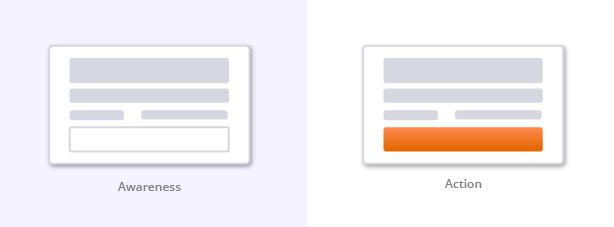
- Campaign objective: Demand gen uses “Brand awareness and reach” or engagement goals; lead gen uses “Leads” or “Sales” objectives
- Targeting: Demand gen targets broader audiences, in-market segments, and custom intent; lead gen targets high-intent keywords and warm remarketing lists
- Creative style: Demand gen emphasizes education and value; lead gen emphasizes urgency and specific offers
- Measurement: Demand gen tracks impressions, view rates, and branded search growth; lead gen tracks conversions, CPL, and pipeline value
Objectives and Targeting: Capturing vs Creating Intent
The fundamental difference in search engine marketing is whether you’re capturing existing demand or generating demand that didn’t previously exist.
Lead-gen-focused Google Search campaigns target bottom-funnel queries that signal active buying intent:
- “Industrial PPC agency near me”
- “Best warehouse management software comparison”
- “B2B marketing services pricing”
Demand generation campaigns target broader, problem-focused queries:
- “How to improve manufacturing marketing ROI”
- “What causes high employee turnover in logistics”
- “Warehouse efficiency best practices 2025”
Google’s audience solutions work differently for each approach. For demand gen, you might target:
- In-market audiences interested in business services
- Custom intent audiences based on competitor research
- Affinity audiences aligned with your industry
For lead gen, you’d focus on:
- Remarketing lists of past site visitors
- Customer match lists from your CRM
- High-intent keyword targeting with exact and phrase match
At Timmermann Group, we configure campaign objectives to match the strategic purpose. Demand gen campaigns might optimize for engaged views or site engagement, while lead gen campaigns optimize for form submissions or phone calls.
Channels Within Google Ads: Which Surfaces for Which Job?
Each Google Ads channel has different strengths for demand gen vs lead gen:
Search Network:
- Primary use: Lead generation on high-intent keywords
- Secondary use: Mid-funnel education on broader problem-focused terms
- Example: Targeting “commercial HVAC maintenance contract” for lead gen; targeting “how to reduce HVAC energy costs” for demand gen
YouTube:
- Primary use: Demand generation through educational video content
- Secondary use: Remarketing with product-focused videos to warm audiences
- Example: A 2025 campaign for a commercial HVAC company showing facility managers how to evaluate maintenance contracts, building awareness before they search
Display Network:
- Primary use: Upper and mid-funnel awareness, remarketing nurture
- Secondary use: Retargeting converters with upsell messaging
- Example: Banner ads promoting a free “2025 Facility Maintenance Cost Guide” to in-market audiences
Discovery Campaigns:
- Primary use: Native demand gen across Gmail, YouTube, and Discover
- Secondary use: Remarketing with softer CTAs
- Example: Reaching facility managers browsing industry content with helpful educational messaging
Performance Max:
- Can serve both purposes but skews toward lead capture when optimized for conversions
- Works best for lead gen when you have strong conversion data to train the algorithm
- Example: Driving demo requests across all Google surfaces with smart bidding
Coordinated messaging across these channels is essential. A potential buyer might first see your YouTube ad, then encounter a Display remarketing ad, and finally convert through Search. Inconsistent messaging creates friction; coordinated campaigns accelerate the buyer journey.
Creative and Offers: Educational vs Conversion-Focused
Demand gen creative leads with value, not asks:
- “2025 Guide to Lowering Logistics Costs (Free Download)”
- “Watch: 5 Warehouse Mistakes Costing You 20% in Labor”
- “How Leading Manufacturers Are Cutting Production Downtime”
Lead gen creative emphasizes specific offers and urgency:
- “Book Your Free Logistics Cost Analysis—Limited Spots”
- “Get a Custom WMS Demo in 15 Minutes”
- “Request Your Manufacturing Efficiency Assessment Today”
The landing page experience must match the intent. Demand gen landing pages prioritize:
- Content depth and helpful resources
- Easy navigation to related content
- Multiple engagement paths (read, watch, explore)
Lead gen landing pages prioritize:
- Single, clear CTA above the fold
- Minimal navigation and distractions
- Trust signals (testimonials, logos, guarantees)
- Fast-loading, mobile-optimized forms
Measurement and KPIs in Google Ads
Demand gen and lead gen require different measurement frameworks to accurately assess performance.
Demand Generation KPIs:
- Impressions and reach (tracking audience exposure)
- Video view rate and watch time (measuring content engagement)
- View-through conversions (tracking later conversions from viewers)
- Assisted conversions (attributing credit to awareness touchpoints)
- Branded search volume growth (measuring awareness impact over 3–6 months)
- Cost per thousand impressions (CPM), typically $5–15 for Display/YouTube
Lead Generation KPIs:
- Conversions and conversion rate (direct response measurement)
- Cost per conversion/lead (efficiency tracking)
- Qualified lead rate (quality measurement)
- MQL-to-SQL progression (pipeline quality)
- Cost per SQL and pipeline value (revenue-focused metrics)
- Closed-won revenue from nurtured leads (ultimate ROI)
Advanced tracking through GA4, offline conversion imports, and CRM integration allows you to connect both demand and lead gen efforts to actual revenue. This is critical for proving the full-funnel value of demand generation—showing that YouTube viewers eventually became your highest-value customers, even if they didn’t convert immediately.
How Demand Generation and Lead Generation Work Together in a Full-Funnel Google Ads Strategy
The ideal state is a synchronized system where Google Ads works alongside SEO, social media, email, and CRO to support both awareness and conversion. Demand generation fills the top of the funnel with the right target audience while lead generation systematically nurtures and converts that audience into customers.
Think of it as a flywheel. Demand gen campaigns grow your remarketing lists and drive branded search volume. Lead gen campaigns mine these warm audiences for near-term opportunities. The learnings from lead gen (what converts, what objections arise, what buyers ask) inform better demand gen content. And the cycle continues, building momentum.
How users flow through a coordinated full-funnel strategy:
- Stage 1: User sees your YouTube awareness ad explaining a problem they recognize but haven’t prioritized
- Stage 2: User visits your site, consumes educational content, and enters your remarketing audience
- Stage 3: User receives Display remarketing showing a deeper guide or case study, reinforcing your expertise
- Stage 4: User later searches a high-intent solution keyword, sees your Search ad, and requests a demo
- Stage 5: Sales follows up with context from analytics, knowing which content the lead engaged with
This is how demand gen creates the conditions for successful lead generation. Without the earlier touches, that Search ad competes against more familiar brands—and loses.
When to Prioritize Demand Generation in Google Ads
Lean more heavily on demand gen in these scenarios:
New market entry: If you’re expanding into a new geography or vertical in 2025, your target audience doesn’t know you exist. Lead gen campaigns will struggle because there’s no brand recognition to convert. Invest in building awareness first.
Launching a new product category: When you’re creating demand for something buyers don’t know they need, demand generation builds awareness of the problem before you pitch the solution. This is demand creation in its purest form.
Stagnant branded search and direct traffic: If your branded search volume has plateaued or declined, it signals that you’re not generating new interest. Demand gen campaigns can reignite growth.
Long sales cycles (6+ months): When buyers spend months researching before purchasing, you need consistent presence throughout their buying process. YouTube campaigns and thought leadership content keep you top-of-mind.
Guidance on budget and timelines: Commit 20–40% of your PPC budget to demand gen for at least 3–6 months before judging results solely on last-click conversions. Track leading indicators like engaged sessions, video completion rates, and branded search growth.
When to Emphasize Lead Generation in Google Ads
Prioritize lead gen more heavily in these situations:
Mature brand with strong awareness: If you have solid brand recognition and steady organic/direct traffic, you can focus marketing efforts on capturing that demand rather than creating it.
Aggressive quarterly revenue targets: When sales teams need pipeline fast, high-intent Search and Performance Max campaigns deliver quicker results than awareness campaigns.
Highly localized services: For legal, medical, or industrial services where search intent is very clear (“commercial electrician St. Louis”), lead gen campaigns capture ready-to-buy prospects efficiently.
Established category with clear buying signals: When potential customers know exactly what to search for (“CRM software demo,” “managed IT services quote”), lead gen captures that inbound demand effectively.
Even in lead-gen-heavy phases, maintain a baseline of demand gen activity. Without it, you’ll see long-term brand erosion—rising CPCs as you compete harder for a shrinking pool of high-intent searchers, and declining conversion rates as competitors build stronger brand affinity.
Practical Examples: Applying Demand Gen vs Lead Gen in Real Google Ads Campaigns
Let’s make this concrete with specific scenarios.
Example 1: B2B Precision Components Manufacturer (2024–2025)
A Midwest manufacturer of precision-machined components wants to expand its customer base beyond existing relationships. Their challenge: engineers and procurement managers don’t search for them by name because they’ve never heard of them.
Demand gen approach:
- YouTube campaigns targeting manufacturing engineers with educational content: “5 Tolerance Mistakes That Kill Part Quality”
- Display campaigns promoting a downloadable “2025 Precision Machining Specifications Guide” to in-market audiences
Lead gen approach:
- Search campaigns targeting high-intent queries: “precision machining RFQ,” “CNC machining quote Midwest”
- Remarketing campaigns to site visitors who downloaded the guide, offering a free manufacturing consultation
Result: The YouTube campaign generates 100,000 impressions and 15,000 video views over three months. Branded search for the company name increases 35%. When those warmed prospects later search for machining services, the company’s Search ads convert at 12%—double their previous rate with cold audiences.
Example 2: Regional Accounting Firm (Professional Services)
A regional accounting firm wants to attract mid-market businesses for tax planning and CFO advisory services. They compete with well-known national firms and local CPAs.
Demand gen approach:
- YouTube campaigns explaining “2025 Tax Law Changes Every Business Owner Should Know”
- Display campaigns promoting free educational content on tax planning strategies
Lead gen approach:
- Search campaigns on “business tax planning services [city]” and “CFO advisory services”
- Landing pages offering a free 30-minute tax strategy consultation
Result: The educational content positions the firm as experts. Business owners who watched the tax law video and later searched for services were 3x more likely to book a consultation than those who encountered the firm cold.
Sample Funnel Architecture: From Awareness to SQL
Here’s a step-by-step funnel structure you can adapt:
Step 1: YouTube Awareness Campaign
- Promote a 2025 industry trends video relevant to your target buyers
- Objective: Video views and engagement
- Budget: 25% of total Google Ads spend
- KPIs: View rate, watch time, audience growth
Step 2: Display Remarketing Campaign
- Target video viewers and site visitors with ads promoting a deeper educational guide
- Objective: Drive site engagement and email capture
- Budget: 15% of total spend
- KPIs: Engaged sessions, guide downloads, email signups
Step 3: Search Campaign on High-Intent Keywords
- Target solution-focused queries with demo CTAs
- Objective: Lead capture (demo requests, consultation bookings)
- Budget: 45% of total spend
- KPIs: Conversions, cost per conversion, qualified lead rate
Step 4: Email Nurture and Sales Follow-Up
- Leverage CRM data and analytics to personalize outreach
- Sales gets context on which content the lead engaged with
- Objective: Convert leads into qualified prospects
GA4 attribution often reveals that many high-value leads first touched a demand gen campaign weeks or months before converting via Search. Without that attribution visibility, you’d undervalue the YouTube campaign that started the relationship.
Choosing the Right Mix: How to Balance Demand Gen and Lead Gen in Google Ads
There’s no universal split between demand gen and lead gen spend. The right mix depends on your specific situation.
Factors that influence your allocation:
- Sales cycle length: Longer cycles (6+ months) favor more demand gen investment
- Deal size: Higher-value deals justify longer awareness-building periods
- Brand maturity: Newer or lesser-known brands need more demand gen; established brands can lean into lead gen
- Competition in Google Ads auctions: Highly competitive keywords may require more brand-building to improve conversion rates
- Existing organic presence: Strong SEO and content marketing can offset some demand gen needs
Example budget splits:
- Newer advertisers needing quick wins: 70% lead gen / 30% demand gen, with plan to shift toward 60/40 as brand awareness grows
- Mature brands investing in long-term growth: 50% lead gen / 50% demand gen, building sustainable pipeline while capturing current demand
- New market entry or product launch: 60% demand gen / 40% lead gen for the first 6 months, then rebalance as awareness builds
The key is continuous testing and reallocation based on performance data—not static percentages set once and forgotten.
How to Measure and Adjust Over Time
Use blended metrics to evaluate whether your mix is working:
- Overall CAC: What’s your true cost to acquire a customer, accounting for all marketing spend?
- Pipeline created: How much pipeline value did marketing efforts generate this quarter?
- Revenue by first-touch channel: Which campaigns are originating your highest-value customers?
Time horizons to expect:
- Demand gen effects typically appear in leading indicators within 30–60 days (video views, site engagement, remarketing audience growth)
- Pipeline impact from demand gen usually shows up within 90–180 days, depending on sales cycle length
- Lead gen effects are more immediate, with conversions and CPL trackable within weeks
Use GA4, CRM integrations, and offline conversion imports into Google Ads to refine both demand and lead gen campaigns. Import actual closed-won revenue data to train Google’s algorithms on what a valuable conversion really looks like—not just form fills, but revenue-generating customers.
How Timmermann Group Can Help You Build a Full-Funnel Google Ads Strategy
At Timmermann Group, we don’t run isolated Google Ads campaigns. We integrate SEO, PPC, web design, UX & CRO, social media marketing, email marketing, and analytics into a unified growth system designed to deliver measurable business growth over time.
We see too many businesses with lopsided strategies—dumping budget into high-intent Search campaigns while ignoring the demand gen work that would make those campaigns more efficient. Or running awareness campaigns with no measurement framework to prove their value.
Our approach:
- Audit your existing Google Ads account to diagnose over-reliance on lead gen, underinvestment in demand gen, tracking gaps, or landing page friction
- Map your buyer journey to identify where prospects drop off and where additional touchpoints would accelerate conversion
- Build coordinated campaigns across Search, YouTube, Display, and Performance Max with appropriate objectives for each funnel stage
- Implement proper measurement through GA4, offline conversion imports, and CRM integration so you can see the true ROI of both demand and lead gen efforts
- Optimize continuously using our flywheel marketing model—adding force (new demand, better content, expanded reach) while removing friction (UX issues, slow pages, misaligned messaging)
The result: more higher quality leads, healthier sales pipelines, and lower true acquisition costs over time. Not just more form fills—more revenue.
Next Steps: Talk with Our Team
Ready to evaluate whether your Google Ads strategy has the right balance of demand gen and lead gen? Schedule a free strategy call with our team.
What we’ll cover in your consultation:
- Review of your current Google Ads account structure and performance
- Mapping of your target audience’s buyer journey and funnel stages
- Recommendations on channel mix, budget allocation, and campaign objectives
- Assessment of your measurement and analytics setup
Take the First Step
Schedule a 30-minute consultation if you are a B2B or B2C business seeking long-term, data-driven growth, not quick fixes. We will work with you to build a Google Ads strategy that creates demand today and converts leads tomorrow.