Conversion Rate Optimization (CRO): The 2026 Guide
Did you know most websites convert at just 2-3%? Out of every 100 visitors, only 2 or 3 actually take action. The rest leave without doing anything. Meanwhile, top-performing websites are hitting conversion rates of 11% or higher. By the end of this guide, you’ll have a solid understanding of what Conversation Rate Optimization (CRO) is, with a complete roadmap for closing that gap and getting more from every visitor who lands on your site.
Key Takeaways
- CRO is the systematic process of increasing the percentage of website visitors who complete desired actions like purchases, signups, or downloads
- Average conversion rates across industries hover around 2-3%, but top-performing websites achieve conversion rates of 11% or higher through strategic optimization
- CRO focuses on improving user experience, reducing friction, and using data-driven testing rather than guesswork to boost conversions
- The process involves analyzing user behavior, identifying drop-off points, forming hypotheses, and continuously testing changes to maximize existing traffic value
- Successful CRO strategies combine quantitative analytics with qualitative user research to understand both what users do and why they do it
Everything You Need To Know About Conversion Rate Optimization (CRO) in 2026
Conversion rate optimization is the process of increasing the percentage of website visitors who complete a desired action on your website or mobile app. Rather than focusing solely on driving more traffic, CRO maximizes the value of your existing visitors by converting more of them into paying customers, subscribers, or leads.
At its core, CRO differs from traffic generation strategies. While search engine optimization and digital marketing campaigns work to attract new website visitors, CRO focuses on making your current website traffic more valuable. This approach often delivers higher returns on investment because improving your site’s conversion rate amplifies the effectiveness of all your marketing efforts.
The relationship between user experience and conversion optimization can’t be understated. Every element that improves how visitors interact with your site (from faster loading speeds to clearer navigation) directly impacts your ability to convert visitors into customers. Modern CRO recognizes that conversion optimization isn’t just about tweaking button colors; it’s about creating seamless, friction-free experiences that naturally guide users toward your conversion goals.
ICRO is essential for digital marketing ROI because customer acquisition costs continue to rise across most channels. When you can double your conversion rate from 2% to 4%, you effectively double your marketing ROI without spending additional money on advertising. This efficiency makes CRO one of the most cost-effective growth strategies available to businesses of all sizes.
What Counts as a Conversion?
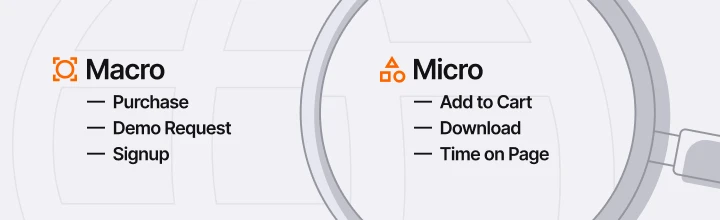
Conversions fall into two main categories: primary conversions and micro-conversions, each serving different roles in your overall business strategy.
Primary conversions represent your main business objectives. For ecommerce sites, this typically means completed purchases. SaaS companies focus on trial signups or subscription conversions. B2B companies often prioritize contact form submissions or demo requests. Content publishers might target newsletter subscriptions or premium membership signups.
Micro-conversions are smaller actions that indicate progress toward your primary conversion goal. These might include adding products to a shopping cart, downloading a whitepaper, viewing multiple product pages, or spending significant time engaging with your content. While these actions don’t immediately generate revenue, they provide valuable insights into user intent and help identify potential customers who need additional nurturing.
How to Calculate & Measure Conversion Rates
At the heart of conversion optimization is a straightforward formula: Conversion Rate = (Number of Conversions ÷ Total Visitors) × 100. While the math is simple enough, it tells you something powerful, how well your website turns visitors into customers.
The real insight, though, comes from understanding what’s actually behind those numbers…
Let’s say your ecommerce site gets 10,000 visitors in a month and 250 of them make a purchase. Your conversion rate would be (250 ÷ 10,000) × 100 = 2.5%. Put another way, only 2.5% of visitors actually buy something, the other 97.5% leave empty-handed.
Now, what counts as a “good” conversion rate? That depends entirely on your industry and where your traffic comes from. Most ecommerce sites hover around 2-3%, though the best performers hit 11% or higher. Campaign-specific landing pages average about 2.35%, but when they’re really dialed in, they can break 10%. SaaS trial conversions are all over the map (anywhere from 1% to 20%) depending on how complex the product is and who you’re targeting.
Here’s where things get interesting: not all pages convert equally. Your homepage might limp along at 0.5% while your product pages cruise at 4%. This gap is actually valuable information. It shows you exactly where to focus your optimization efforts for the biggest impact.
The tricky part? Making sure you’re measuring accurately in the first place. A lot of businesses accidentally sabotage their own data by counting internal traffic, tracking the same visitor multiple times, or measuring conversions over timeframes that don’t match their actual sales cycle. To get clean data, you need to set up your tracking thoughtfully, defining conversion windows that make sense for your business and filtering out traffic that doesn’t matter.
Understanding Each Stage of the CRO Process
Conversion rate optimization isn’t about making random tweaks and hoping for the best. The best results come from following a systematic six-step process that turns guesswork into data-driven decisions. And here’s the thing; it’s not a one-and-done deal. Each test you run teaches you something new, feeding into your next hypothesis and making your optimization efforts sharper over time.
Step 1: Conversion Audit & Goal Setting
Start by getting a clear picture of where you stand. Dig into Google Analytics, heat maps, and session recordings to see how your site is actually performing. Look for pages that get a ton of traffic but aren’t converting well. That’s where you’ll find your biggest opportunities.
When you set goals, be specific. “Improve conversions” is too vague. Instead, aim for something like “boost product page conversion from 3.2% to 4.5% in the next 90 days.” Concrete targets like this help you prioritize what to test and know when you’ve actually succeeded.
It helps to know where you stand compared to everyone else too. If your ecommerce site converts at 1.8% and the industry average is 2.5%, you’ve got clear room to grow. But if you’re already at 4%, you’re probably looking at fine-tuning rather than major overhauls.
Step 2: User Behavior Analysis
Analytics show you where people land on your site, how they move through it, and where they bail out. Pay special attention to pages with lots of traffic but low conversions.
Map out your user funnels to spot where people are dropping off. For ecommerce, it’s usually at the product page, cart, or checkout. B2B sites often lose people at contact forms or pricing pages.
But numbers only tell you what’s happening, not why. That’s where surveys, feedback, and user interviews come in. Someone might abandon their cart, but only a conversation will tell you it’s because your shipping costs were a surprise or your checkout form felt sketchy.
Don’t forget to segment your data either. Mobile users behave differently than desktop users. First-timers aren’t the same as returning customers. Understanding these differences lets you optimize for specific groups instead of trying to please everyone with one experience.
Step 3: Hypothesis Formation
Now you’re ready to form real hypotheses, or educated guesses backed by data and psychology. Use this format: “If we [make this change], then [this metric] will [improve by this amount] because [reason based on user research].”
For example: “If we cut our checkout form from 8 fields to 4, checkout completion will increase by 15% because user feedback shows people think the current form is too long and they’re abandoning because of it.”
You can’t test everything at once, so prioritize using a framework like PIE.
- Potential (how much improvement you expect)
- Importance (how much traffic the page gets)
- Ease (how hard it is to implement)
The difference between a strong hypothesis and a weak assumption? Strong hypotheses are specific, measurable, and rooted in actual research. Weak assumptions are just broad claims with no evidence or clear way to measure success.

Step 4: A/B Testing & Experimentation
When you set up a test, make sure it’s properly controlled. Your testing tool should randomly split visitors between variations and keep their experience consistent if they come back.
Most tests need at least two weeks to run. You want to capture different days of the week since people behave differently on Mondays versus Saturdays. Calculate your required sample size upfront so you know you’ll actually reach statistical significance in a reasonable timeframe.
Know the difference between A/B testing and multivariate testing too. A/B tests compare two versions of one element. Multivariate testing looks at multiple changes at once, which needs way more traffic but can show you how different elements interact with each other.
Avoid common mistakes: don’t stop tests early, don’t test too many things at once, and don’t make changes mid-test. Set your success criteria before you start and stick to them, even if early results look tempting.
Step 5: Results Analysis
Statistical significance matters. A 95% confidence level means you can be pretty sure the difference you’re seeing isn’t just random chance.
Look beyond your primary metric. Maybe a variation increases conversions but also increases bounce rate or tanks session duration. You need to weigh those trade-offs before declaring victory.
If you’re running lots of tests, watch out for false positives. The more tests you run, the more likely you are to stumble on fluky results. Use proper statistical controls to keep this in check.
And don’t just implement and forget. Some winning variations show immediate gains that fade over time, while others create lasting changes that compound for months. Keep monitoring.
Step 6: Implementation & Iteration
When you roll out a winning change, do it carefully. If possible, start with a percentage of your traffic before going all-in, just to make sure it keeps performing.
The real magic happens when you build a culture of continuous optimization. Document everything: wins, losses, and the insights from both. Share learnings across teams. Keep a running list of new test ideas.
Create a roadmap that prioritizes future tests based on potential impact and resources. Queue up follow-up tests that build on what’s already working.
Finally, step back regularly (monthly or quarterly) and look at the big picture. Are your conversion improvements actually moving the needle on revenue and customer lifetime value? That’s what matters in the end.
Different CRO Strategies That Help Drive Business Results
Proven conversion rate optimization strategies work across different industries because they address fundamental aspects of user experience and decision-making psychology. These tactics have consistently delivered measurable improvements when properly implemented and tested.
The key to successful implementation lies in adapting these strategies to your specific audience and business model rather than copying them exactly. What works for one company might need modification to succeed for another, which is why testing remains crucial even when implementing “proven” strategies.
Website Speed & Performance Optimization
Page load speed directly impacts conversion rates, with sites loading in one second converting 2.5 times higher than those taking five seconds. Every additional second of load time can decrease conversions by 7-10%, making speed optimization one of the highest-impact conversion improvements available.
Mobile responsiveness has become critical as mobile devices now generate 58% of website traffic. Mobile users often have less patience for slow loading web pages and poor user experiences, making mobile optimization essential for maintaining conversion rates across all device types.
Technical optimization tools like Google PageSpeed Insights provide specific recommendations for improving loading speeds. Common improvements include image compression, browser caching, content delivery networks, and minimizing HTTP requests. These technical changes often require developer resources but deliver immediate, measurable results.
The relationship between site speed and user behavior extends beyond just conversion rates. Faster sites typically see lower bounce rates, higher page views per session, and better search engine rankings. This creates a compound effect where speed improvements enhance both conversion optimization and search engine optimization efforts.
Landing Page Optimization
The best landing pages all share a few key elements. They lead with a clear, benefit-focused headline that immediately tells visitors what’s in it for them. The copy addresses concerns and objections while building desire for what you’re offering.
Your most important information should be visible without scrolling. These are things like your value proposition, key benefits, and a prominent call-to-action button. Just don’t cram everything above the fold, or you’ll create visual chaos that confuses people instead of converting them.
Social proof is huge. Think testimonials, usage stats, trust badges, etc. They can boost conversions anywhere from 3-37% by easing visitor anxiety and building confidence. Place them strategically where doubt is likely to creep in.
When it comes to forms, less is more. Progressive profiling lets you collect information over time instead of hitting people with a massive form right away. Sometimes just cutting a form from five fields to three can improve completion rates by 20-30%.
Call-to-Action (CTA) Optimization
Effective call-to-action optimization goes beyond changing button colors, though color psychology does play a role in CTA performance. The most important factors include placement, copy, size, and surrounding design elements that draw attention to your conversion action.
Action-oriented copy that creates urgency or emphasizes benefits typically outperforms generic phrases. “Start Your Free Trial” often converts better than “Submit” because it emphasizes the value proposition rather than the action required.
CTA placement testing can reveal surprising insights about user behavior on your specific pages. While conventional wisdom suggests placing CTAs above the fold, some pages convert better with CTAs positioned after detailed product information or social proof elements.
Multiple CTA variations throughout long pages can capture visitors at different stages of consideration. Someone ready to convert immediately might click a top-of-page CTA, while others need more information before taking action and prefer CTAs positioned after detailed content.
2025’s Top CRO Tools & Technology Stacks
Modern conversion rate optimization requires sophisticated tools that provide both quantitative analytics and qualitative user insights. Building an effective CRO technology stack involves selecting tools that integrate well together and provide comprehensive visibility into user behavior and conversion performance.
The right combination of analytics tools, testing platforms, and user research software enables data-driven optimization decisions while streamlining the testing and implementation process. However, tool selection should match your budget, technical capabilities, and specific optimization needs rather than simply choosing the most popular options.
Analytics & Data Collection Tools
Google Analytics 4 provides comprehensive conversion tracking and funnel analysis capabilities that form the foundation of most CRO programs. Proper GA4 setup includes conversion goals, enhanced ecommerce tracking, and custom events that capture micro-conversions throughout the user journey.
Heat map tools like Hotjar and Crazy Egg reveal how visitors interact with your web pages through visual representations of clicks, scrolls, and mouse movements. This behavioral data helps identify usability issues and optimization opportunities that aren’t obvious from standard analytics reports.
Session recording software captures actual user sessions, allowing you to watch how real visitors navigate your site. These recordings reveal friction points, confusion areas, and abandonment triggers that inform hypothesis formation and test prioritization.
Advanced analytics tools like Heap and Mixpanel provide event-based tracking that captures every user interaction automatically. This comprehensive data collection enables sophisticated analysis of user behavior patterns and conversion funnel performance without requiring extensive manual setup.
A/B Testing Platforms
Popular testing tools, including Optimizely, VWO, and Google Optimize, offer different features and pricing models suited to various business needs. Enterprise platforms provide advanced targeting, personalization, and integration capabilities, while simpler tools focus on ease of use and quick implementation.
Selecting the right testing platform depends on factors including traffic volume, technical resources, budget constraints, and integration requirements. High-traffic sites benefit from advanced statistical capabilities, while smaller businesses might prioritize user-friendly interfaces and lower costs.
Integration requirements become crucial when connecting testing tools with existing analytics platforms, customer databases, and marketing automation systems. Seamless integrations enable more sophisticated targeting and measurement while reducing manual data management overhead.
Statistical rigor in testing platforms varies significantly, with some tools providing advanced features like sequential testing, Bayesian analysis, and automated significance calculations. These capabilities help ensure reliable results while reducing the risk of false positive conclusions.
User Feedback & Research Tools
Survey tools enable direct collection of user insights and identification of conversion barriers that aren’t visible in behavioral data. Post-purchase surveys, exit-intent surveys, and on-page feedback widgets provide qualitative context for quantitative optimization efforts.
User testing platforms like UserTesting and Lookback facilitate moderated and unmoderated research sessions where real users complete tasks while thinking aloud. These sessions reveal usability issues and mental models that inform both design improvements and conversion optimization strategies.
Live chat and messaging tools serve dual purposes by providing conversion assistance and gathering user feedback. Chat transcripts often reveal common questions and objections that can be addressed through website optimization or additional content.
Customer interview platforms and scheduling tools help scale qualitative research efforts by making it easier to recruit participants and conduct structured interviews. Regular customer interviews provide ongoing insights into evolving user needs and preferences.
CRO Best Practices & Common Mistakes
The best conversion optimization programs follow proven guidelines that get results while avoiding the traps that waste time and money. Understanding these best practices helps you build a systematic process that delivers steady improvements instead of random wins.
What separates successful CRO programs from mediocre ones? They combine technical know-how with a real understanding of user psychology and business goals. It’s a holistic approach that focuses on long-term business growth, not just juicing short-term metrics.
Data-Driven Decision Making
Base your optimization decisions on actual user data, not assumptions or what you personally prefer. That means setting up solid measurement systems before you change anything, and actually looking at the data when you evaluate results.
You need both quantitative and qualitative insights to really understand what’s happening. Analytics tell you what users are doing, but surveys and user testing tell you why they’re doing it and what’s stopping them from converting.
Setting up proper measurement means defining clear success metrics, establishing your baseline performance, and implementing tracking that captures both primary conversions and secondary effects. This foundation lets you accurately assess what’s working and what ROI you’re actually getting.
Don’t just check your dashboard daily and call it good. Monthly or quarterly deep dives often uncover trends, seasonal patterns, and opportunities you’d never spot from surface-level monitoring.
Testing Best Practices
Let your tests run long enough to reach statistical significance. Stopping early leads to wrong conclusions and false positives. Most tests need at least two weeks to account for how people behave differently throughout the week, though high-traffic sites might get there faster.
Common testing mistakes are easy to make if you’re not disciplined about it. Don’t test too many elements at once, don’t make changes mid-test, and don’t draw conclusions from tiny sample sizes.
Create a company-wide testing calendar so different teams aren’t stepping on each other’s toes. When multiple tests run simultaneously, they can interact in ways that mess up your results and make it impossible to know what actually caused an improvement.
Document everything and share what you learn. When testing insights stay trapped in individual teams, you’re wasting knowledge. Build a database of test results, learnings, and hypotheses. Over time, it becomes institutional knowledge that makes future optimization efforts smarter.
User-Centric Optimization
Focus on what users actually need and struggle with, not what the business wants to push. This means understanding your customer personas and tailoring experiences for different segments instead of optimizing for some mythical “average” user.
Customer personas help you understand the different motivations, concerns, and decision-making processes that drive conversion behavior. B2B buyers aren’t the same as B2C consumers. First-time visitors behave differently than returning customers. These differences matter.
How CRO Changes for Different Business Models
Here’s a trap to avoid: don’t boost short-term conversions at the expense of customer satisfaction and retention. Balance your conversion goals with long-term user experience and brand trust. Sustainable CRO strategies make the experience better while encouraging people to take action… not manipulating them into it.
Make sure you’re actually listening to users. Regular surveys, customer interviews, and feedback analysis keep you plugged into what real users care about and how their needs are changing. You want to solve actual problems, not the ones you think exist.
Here’s the reality: conversion optimization isn’t one-size-fits-all. Different industries and business models need tailored approaches that match how their specific customers behave, how long their sales cycles run, and what “conversion” actually means for them.
The best industry-specific optimization takes universal CRO principles and layers on specialized tactics that address the unique challenges each business faces. This targeted approach beats generic strategies every time.
E-commerce CRO
For ecommerce, it all starts with your product pages. High-quality images, detailed descriptions, customer reviews, clear pricing — these address the main concerns stopping people from buying. Multiple images and zoom features help recreate that in-store shopping experience online.
Your cart and checkout process is where things often fall apart. Guest checkout, progress indicators, multiple payment options, upfront shipping costs. These reduce the friction that causes abandonment. Cut your checkout from five steps to two and you could see conversions jump up to 35%.
Cross-selling and upselling done right increase your average order value while actually helping customers. Product recommendations based on browsing behavior, purchase history, and what similar customers bought can significantly boost revenue per visitor.
Trust signals matter more in ecommerce than almost anywhere else. People need confidence that your products are legit and their transactions are secure. Customer testimonials, security badges, clear return policies, or money-back guarantees. These all help overcome the natural skepticism of buying from a screen.
SaaS & B2B CRO
For SaaS, optimizing trial signups means making it easy to start while still capturing qualified leads. Free trials, freemium models, product demos, you name it. Things like these let potential customers experience value before pulling out their wallets. Your value proposition and copy need to speak to business decision-making, not just features.
Lead generation forms are a balancing act. You want information, but long forms kill conversions. Progressive profiling lets you collect details over time instead of hitting prospects with a massive form right away. Even small reductions in form fields can dramatically improve completion rates. Getting trial users to become paying customers depends on them experiencing value fast, and includes things like guided tours, progress tracking, and achievement systems.
B2B sales funnels are longer and more complex, with multiple stakeholders involved. You need content that speaks to different roles and concerns throughout the buying process to keep prospects moving forward.
Content & Media CRO
Building an email list is about growing an engaged audience that gives you ongoing conversion opportunities. Lead magnets, content upgrades, newsletter pitches, etc. They all need to clearly show why subscribing is worth it while not feeling like a big commitment.
Content gating is a trade-off between lead generation and user experience. Give some content away freely, gate the premium stuff. Test different thresholds to find the sweet spot between growing your audience and keeping content accessible.
If you’re running ads, optimization means improving engagement metrics that make your ad inventory more valuable. More time on site, more pages per session, more return visitors — these create a more valuable audience for advertisers.
Community features like comments, social sharing, and user-generated content improve both direct conversions and long-term audience building. They give people reasons to come back and engage regularly.
Breaking Down the Relationship Between CRO & SEO
Conversion optimization and search engine optimization (SEO) aren’t separate strategies. They work together. Good CRO maximizes the value of your organic traffic, while better user experience signals improve your search rankings. It’s a two-way street.
Modern search algorithms care more and more about user experience factors that directly relate to conversions. Page load speed, mobile responsiveness, engagement metrics like time on site and bounce rate. These affect both your search visibility and your conversion rates.
Technical SEO priorities often align with conversion optimization anyway. Faster loading speeds help both rankings and conversions. Mobile-friendly designs boost both mobile search performance and mobile conversions. Structured data markup can improve search visibility while making information clearer for users making decisions.
When you’re optimizing copy, you need to balance keywords with conversion-focused language. Pages targeting commercial keywords need to satisfy SEO requirements while also being persuasive. Use natural language that incorporates keywords but also addresses user concerns and objections.
Your content strategy should serve both SEO and conversions. Blog posts that attract organic traffic should include clear conversion paths and calls-to-action that guide visitors toward your business goals. That way you actually get ROI from your content marketing.
Internal linking can work double duty too, supporting SEO while creating conversion funnels. Strategic internal links distribute page authority while guiding users through content progressions that build trust and move them toward taking action.
Measuring CRO Success & ROI
Measuring conversion optimization success goes beyond just tracking conversion rate improvements. You need to understand the full business impact of your efforts. Why? The bigger picture that helps justify your CRO investments and guides decisions about where to put your resources.
Good ROI measurement looks at direct conversion improvements plus secondary effects like changes in customer lifetime value, lower acquisition costs, and better marketing efficiency. These comprehensive metrics give you a more accurate picture of what your CRO program is actually worth.
Track metrics beyond conversion rate, like customer lifetime value, revenue per visitor, cost per acquisition improvements. A bump from 2% to 3% conversion might sound modest, but on a high-traffic site, that can mean millions in additional revenue while cutting your effective cost of customer acquisition.
To calculate the financial impact, you need to know your average order value, customer lifetime value, and traffic volumes. Say you’ve got a site with 10,000 monthly visitors and you improve conversion from 2% to 3%. That’s 100 additional conversions per month, which could represent $10,000 to $100,000+ in additional revenue depending on your business.
Think about long-term versus short-term effects too. Some changes create immediate improvements. Others build value over time. Customer experience improvements might not boost conversion rates right away, but they could significantly improve retention, referrals, and lifetime value down the road.
FAQs
What’s the difference between CRO and digital marketing?
CRO focuses specifically on optimizing existing website traffic for better conversion rates, while digital marketing encompasses all strategies for attracting and engaging customers across channels. CRO maximizes the value of traffic that digital marketing efforts bring to your site. Think of digital marketing as filling a bucket with water (bringing visitors) while CRO is plugging the holes in the bucket (converting more visitors into customers).
How long does it take to see results from CRO efforts?
Most A/B tests require 2-4 weeks to reach statistical significance, but building a successful CRO program typically takes 3-6 months. Initial quick wins may appear within the first month, while compound improvements develop over 6-12 months of consistent testing. The timeline depends heavily on your website traffic volume – sites with 100,000+ monthly visitors see results faster than those with 1,000 monthly visitors.
Can small businesses benefit from CRO, or is it only for large companies?
Small businesses often see bigger percentage improvements from CRO because they start with less optimized websites. Many CRO tactics require minimal budget – simple A/B tests, form optimization, and user experience improvements can dramatically increase conversions without large investments. Even basic changes like improving page load speed or simplifying contact forms can deliver 10-30% conversion improvements.
What’s the biggest mistake companies make when starting CRO?
The most common mistake is making changes based on assumptions rather than data. Many companies copy competitors’ tactics or implement “best practices” without understanding their specific user behavior and needs. Successful CRO always starts with understanding your actual users through data and research. Another major mistake is testing too many elements at once, which makes it impossible to determine which changes actually drove improvements.
Should I focus on increasing traffic or optimizing conversions first?
Focus on CRO first if you already have some website traffic (at least 1,000 monthly visitors). Doubling your conversion rate from 2% to 4% has the same impact as doubling your traffic, but CRO is often easier and more cost-effective than traffic generation. Once optimized, your increased traffic will convert at higher rates. However, if you have very little traffic, you may need to focus on traffic generation first to have enough data for meaningful conversion optimization.